
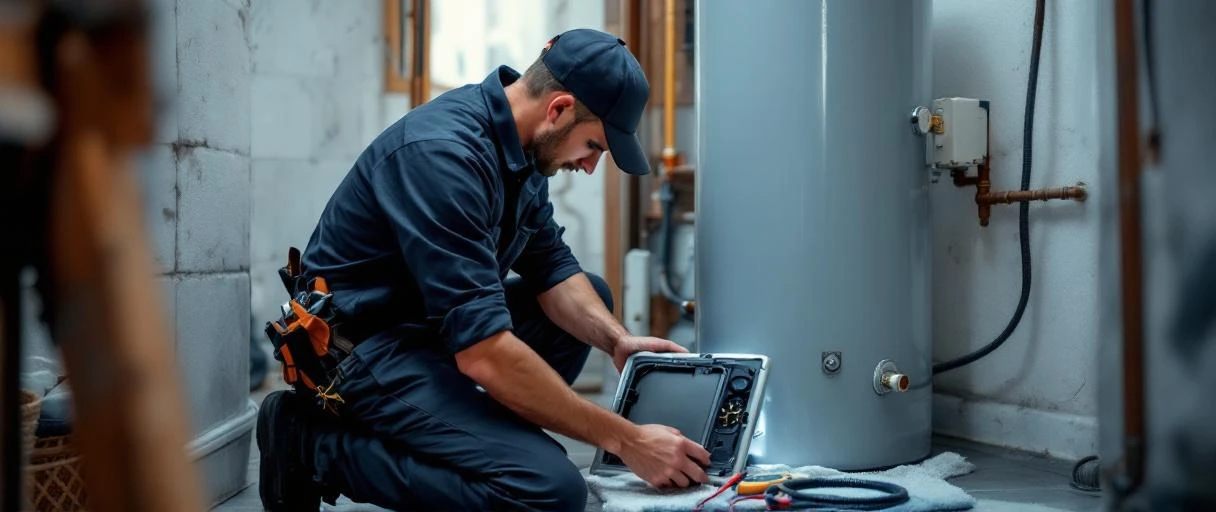
A water heater quits at the worst possible moment — the middle of January cold-shower morning, Christmas Eve dinner prep, the start of a long shower right before work. Emergency Water Heater Repair Cincinnati OH dispatch handles tank corrosion failures, tankless ignition lockouts, anode rod replacements, T&P valve drips, expansion tank retrofits, gas valve faults, element burnouts, and full unit replacement on every major brand. Cincinnati’s 120–150 mg/L moderately hard water and chloraminated supply (since 2015) put pressure on common components, so the diagnostic starts with brand-specific error code reads and component testing before any replacement quote.
When Your Hot Water Quits Without Warning
A complete loss of hot water across all fixtures usually points to one of three causes: total power or gas loss to the unit, complete element burnout (electric), or pilot/ignition failure (gas). The diagnostic starts at the source — breaker on, voltage at the unit, or gas valve open with proper supply pressure. Manometer reading at the unit verifies actual gas pressure rather than just meter pressure; tankless units in particular require precise pressure verification with a manometer at the unit, not at the meter.
The full scope of how an after-hours plumber in Cincinnati handles emergencies across every category lives on our main page, with licensing and pricing context that applies to all overnight calls. Water heater calls cluster heavily in the overnight and weekend windows because the failure becomes obvious at the next shower or dishwasher cycle, and that’s often outside business hours.
Lukewarm-only water on a gas tank usually means the burner is partially functional but undersized — possibly a partially blocked vent or a thermocouple weakness preventing full burner cycling. On electric, lukewarm water typically means one element (upper or lower) has failed and the other is carrying the load. The fix is element replacement, $250–$450 done the same call.
Common Tank Failures We See in Cincinnati Homes
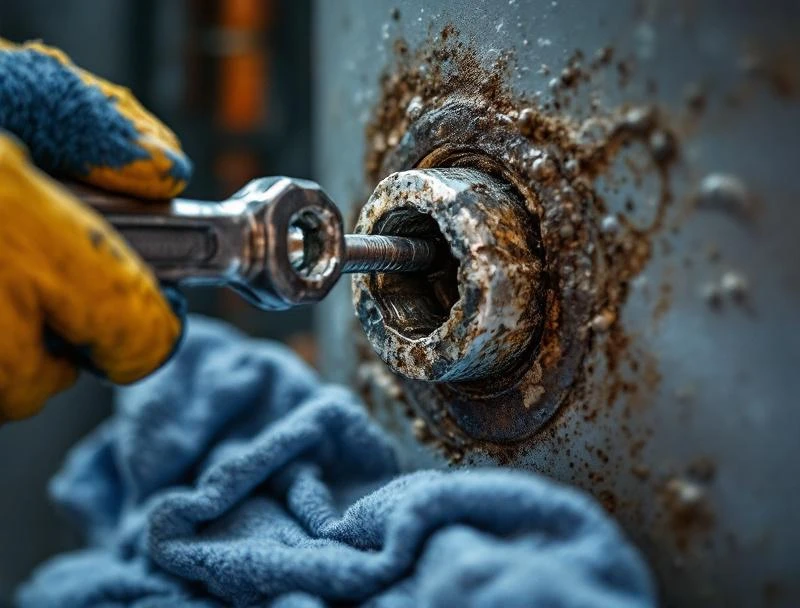
Tank-bottom corrosion is the failure mode that ends a unit’s life. Once water appears at the base of the tank from rust-through, replacement is the only path — there is no patch for tank-shell failure. We see this most often on units past 10–12 years that haven’t had anode rod inspections. Cincinnati’s 120–150 mg/L water hardness consumes magnesium anodes in 3–5 years versus 6+ in soft-water markets, and a consumed anode shifts corrosion from the sacrificial rod to the steel tank shell.
A leaking tank rarely waits for morning, and an overnight Cincinnati plumber on our rotating dispatch handles shut-down, drain-out, and same-night replacement when the unit is past saving. Truck-stocked 40- and 50-gallon gas and electric units cover most overnight tank replacement scope.
T&P (temperature and pressure relief) valve drips often indicate excessive pressure rather than valve failure — when the system has a closed-loop configuration with PRV or check valve and no expansion tank, thermal expansion has nowhere to go and the T&P opens to relieve pressure. The fix is an expansion tank install ($200–$350) plus T&P replacement if it’s been weeping for an extended period.
Sediment, Anode, and Element Wear
Banging or rumbling traces to sediment buildup at the tank bottom. As the burner heats steel under accumulated minerals, water trapped under sediment flashes to steam — the noise is bubbles forcing through. Annual flushing prevents it; serious cases require submersible-pump-driven removal. Discolored or smelly hot water (rotten-egg odor specifically) traces to anode rod chemistry — magnesium reacts with water that contains sulfate-reducing bacteria, producing hydrogen sulfide. Switching to an aluminum-zinc anode resolves the smell without compromising tank protection.
Tankless Errors and What the Codes Mean
Tankless units carry diagnostic intelligence the older tank units don’t. Every Rheem, Navien, Rinnai, Noritz, and Takagi unit displays a specific error code at fault, and the code translates directly to component or condition. Rheem E1 is high-temperature limit — sensor, gas valve, or scale-related. Rheem LC is ignition lockout after four failed attempts; resetting once is acceptable but recurring lockouts need licensed service. Navien 003 is ignition failure. Rinnai 11 is ignition failure. Rinnai 25 is condensate drain blockage — common in winter when condensate freezes in exterior drain lines.
Tankless units in Cincinnati require descaling every 12–18 months due to local water hardness. Manufacturers void warranty if descale interval is exceeded. We descale with white vinegar or commercial descaler circulating through the heat exchanger via the bypass valves built into the install. Descale runs $250–$450 and routinely restores units that owners had assumed were failing.
The federal NAECA 2015 efficiency standards limit standard 50+ gallon gas tanks; replacement of a 50-gal+ unit may now require a power-vent or hybrid heat pump model with venting and electrical changes. We size and quote both options when scope crosses the NAECA boundary.
Diagnosing a Leaking Heater Bottom
Water at the heater base may not actually be from the tank. Common alternative sources include the cold supply line above the heater, a leaking T&P discharge pipe, a corroded drain valve, a failed dielectric union at the cold inlet, or condensate dripping off the cold supply during humid weather. We test each before condemning the tank.
When the water turns out to be coming from the supply line above the heater rather than the tank itself, the work shifts to Cincinnati burst pipe repair scope with copper or PEX section replacement instead of a tank swap. Often a slow drip at a sweat joint produces a wet floor that looks identical to a tank bottom failure.
When water is pooling near the heater but the tank itself tests dry, the source is usually a hidden water leak elsewhere — our techs use acoustic and thermal equipment to trace the actual source before any heater swap is recommended. We’ve stopped many premature heater replacements by tracing the moisture to a slab leak two rooms away.
Pilot Light, Thermocouple, and Ignition Issues
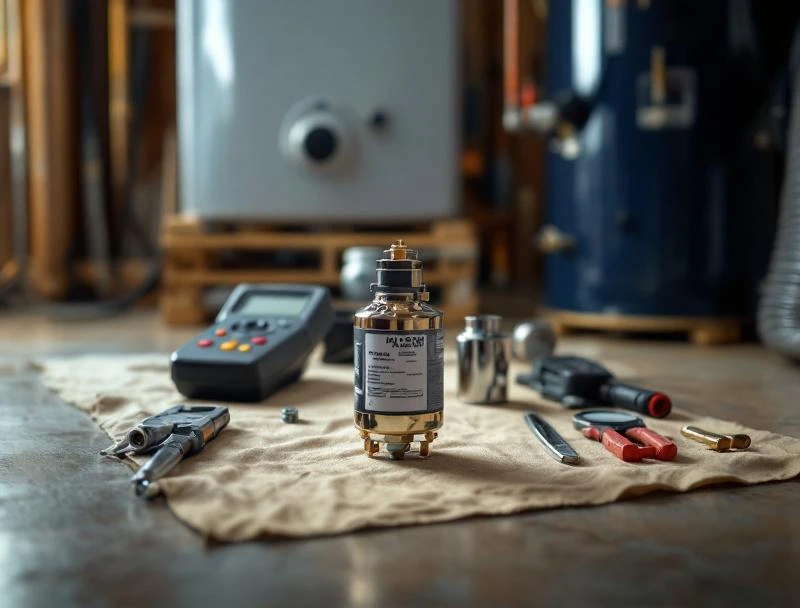
A pilot that won’t stay lit on an older gas tank usually means thermocouple weakness — the small device that senses pilot flame and tells the gas valve to stay open. Replacement runs $200–$350 and the part takes 30 minutes. Newer gas tanks use spark igniters and flame sensors instead of standing pilots; ignition failure on these traces to the igniter, sensor, or gas valve rather than a thermocouple.
If the pilot won’t stay lit and a combustible gas detector flags the supply line rather than the unit itself, the work transitions to Cincinnati gas leak service for pressure testing and fitting replacement. The gas valve at the heater is water-heater-page scope; the line up to the heater is gas-leak-page scope. We make that call on-site based on detector results.
Replacement vs Repair — Decision Factors
Repair makes sense when the unit is under 10 years old, the failed component is replaceable (element, thermocouple, T&P, anode, gas valve, dip tube), and the tank itself shows no corrosion. Replacement is the right call when the unit is past 12–15 years, the tank is leaking, or the cumulative repair cost exceeds 50% of replacement. Tankless units are more often repairable into year 18–20 because the heat exchanger is the only large-cost replacement and most failures are sensor or igniter level.
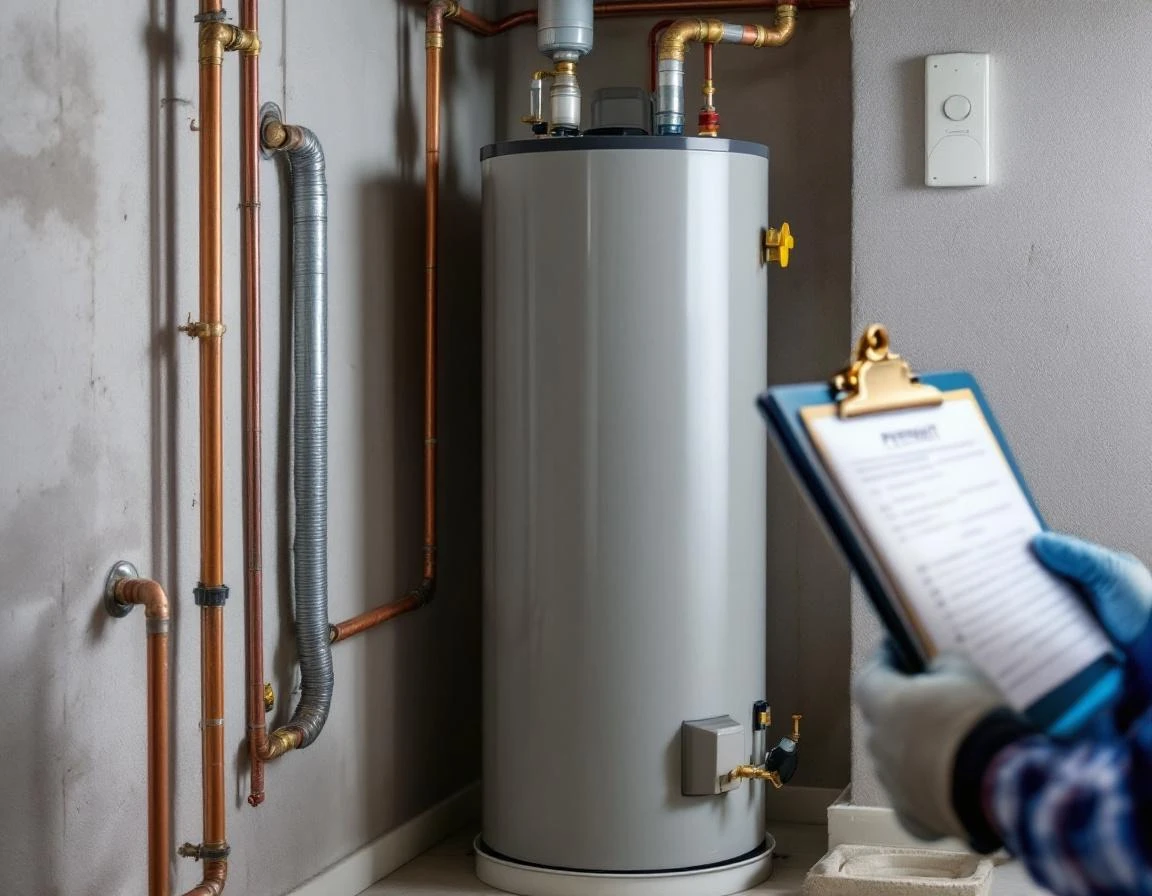
Cincinnati Department of Buildings requires a permit for every water heater swap, including same-size like-for-like. The permit captures expansion tank presence (Ohio code requires it on closed systems with PRV or check valve), T&P discharge piping (must terminate within 6 inches of floor with no threaded end), venting, and gas connection. We file permits same-day so inspection follows in 1–3 business days.
Pricing for Heater Service in Hamilton County
Diagnostic alone runs $85–$150. Component-level repairs (element, thermocouple, anode, T&P, dip tube) run $150–$700. Tankless descale runs $250–$450. Tank replacement: 40-gallon gas $1,400–$2,400; 50-gallon gas $1,600–$2,700; 50-gallon electric $1,200–$1,900. Tankless replacement (Rinnai or Navien condensing): $3,500–$6,500. Heat pump hybrid: $2,800–$4,500. Power vent motor: $400–$650. Expansion tank retrofit: $200–$350.
Cincinnati permit fees run $75–$150 for water heater work. Permit cost is included on most quoted replacement scope.
Cincinnati Water Quality and Anode Rod Life
Greater Cincinnati Water Works delivers water at 120–150 mg/L hardness — moderately hard per USGS classification. Magnesium anode rods consume in 3–5 years versus 6+ in soft-water markets. Aluminum-zinc anodes last longer but produce different chemistry. We pull and inspect anode rods at every service call, photograph the consumption, and replace when more than 60% consumed.
Chloramine disinfection (post-2015) is gentler on rubber gaskets but slightly more aggressive on aluminum anodes than magnesium. Choosing the right anode for Cincinnati water extends tank life past the typical 10–15 year window. Annual flushing keeps sediment under control and reduces element burnout in electric units. Tankless owners get descale reminders at 12–18 month intervals to keep manufacturer warranty intact.
OCILB master plumber credential is required to pull permits. License verification at license.ohio.gov shows status, expiration, and any disciplinary history. Every invoice the plumber issues carries the licence number.
Need a Cincinnati Plumber Now?
Licensed · Bonded · Available 24/7
See Our Emergency Water Heater Repair Cincinnati OH Work in Cincinnati
Network Service Guarantees
- Written estimate before work begins
- All parts and labour warranted
- Licensed Ohio plumbers — verify at license.ohio.gov
- Same-day emergency service available 24/7
Pricing in Hamilton County
| Service | Cincinnati Range | Time Required |
|---|---|---|
| Diagnostic / service call | $85–$150 | 30–60 min |
| Element replacement (electric) | $250–$450 | 1–2 hours |
| Thermocouple replacement (gas) | $200–$350 | 1 hour |
| Gas valve replacement | $400–$700 | 1–2 hours |
| Anode rod replacement | $200–$400 | 1 hour |
| T&P valve replacement | $150–$300 | 30–60 min |
| Tankless descale | $250–$450 | 1–2 hours |
| 40-gal gas tank replacement | $1,400–$2,400 | 2–3 hours |
| 50-gal gas tank replacement | $1,600–$2,700 | 2–3 hours |
| 50-gal electric tank replacement | $1,200–$1,900 | 2–3 hours |
| Tankless replacement (Rinnai/Navien condensing) | $3,500–$6,500 | 4–6 hours |
| Heat pump hybrid replacement | $2,800–$4,500 | 3–5 hours |
| Expansion tank install (code retrofit) | $200–$350 | 1 hour |
← Scroll to see more →
DIY vs Licensed Plumber
| Aspect | DIY Attempt | Licensed Plumber |
|---|---|---|
| Code compliance | Often fails inspection | Built to Ohio code |
| Permit | Not pulled | Cincinnati permit + inspection |
| Pressure test | Skipped | 100 PSI / 15 min per OPC 312 |
| Insurance | May void coverage | Licensed work covered |
| Warranty | No warranty | Parts and labour warranted |
| Recurrence rate | High (no diagnosis) | Low (root cause addressed) |
← Scroll to see more →
Get a Written Estimate Before Work Begins
Licensed Ohio plumbers — verify at license.ohio.gov
Without Professional Service
- Water damage continues spreading
- Larger repair bill comes later
- No permits pulled (insurance issues)
- Unlicensed work fails inspection
With a Licensed Network Plumber
- Fast emergency response time
- Proper repair to Ohio code
- Permits pulled when required
- Work guaranteed and warranted
Cincinnati-Specific Considerations
Cincinnati's housing stock is mixed — pre-1940 ~30%, 1940–1970 ~25%, post-1970 the balance. Each era has characteristic plumbing materials and failure modes. Pre-1940 homes in Northside, Price Hill, Walnut Hills, and Norwood frequently have galvanized supply and cast iron drain still in active service. Mid-century stock has Type M copper hitting end of life now. Suburban slab-on-grade in West Chester, Mason, Liberty Township concentrates slab-leak risk on copper-rebar contact points.
Greater Cincinnati Water Works delivers water at 120–150 mg/L hardness with chloramine disinfection (since 2015). The combination accelerates anode rod consumption, shortens Type M copper service life, and produces characteristic mineral buildup in drain lines. Cincinnati's 30 average freeze days per year drive winter freeze and burst events clustered between January and February. Polar vortex stretches push freeze risk into normally safe interior wall locations.
Cincinnati water and infrastructure
Ohio Licensing and Code Compliance
Every plumbing contractor in Ohio holds an OCILB master plumber licence (or works under one). The Ohio Construction Industry Licensing Board maintains a public lookup at license.ohio.gov — search by contractor name or licence number to verify status, expiration, and any disciplinary history. Cincinnati Department of Buildings handles permits inside city limits; Hamilton County Building Department covers unincorporated areas and townships.
The Ohio Plumbing Code (Ohio Administrative Code 4101:3) is the adopted IPC with Ohio amendments. Pressure test requirements, expansion tank mandates on closed systems with PRV or check valve, lead-free solder on all repair joints, and proper venting on every fixture all apply to emergency repair work the same as scheduled work. The Ohio Plumbing Code allows up to 72 hours to file emergency-work permits with Cincinnati Department of Buildings, giving overnight crews legal cover for after-the-fact filing.
License verification
Frequently Asked Questions
Related Services
Burst Pipe Repair Cincinnati OH
Need burst pipe repair in Cincinnati OH? Licensed plumbers in our network stop the leak, replace the section, and pressure-test the line. Call now.
Learn More →Gas Leak Detection Cincinnati OH
Smell gas in your Cincinnati OH home? Licensed plumbers in our network locate and repair gas line leaks safely. Call us now or 911 for active leaks.
Learn More →Water Leak Detection Cincinnati OH
Need water leak detection in Cincinnati OH? Licensed plumbers in our network locate hidden, slab, and slow leaks with acoustic and thermal tools. Call now.
Learn More →