
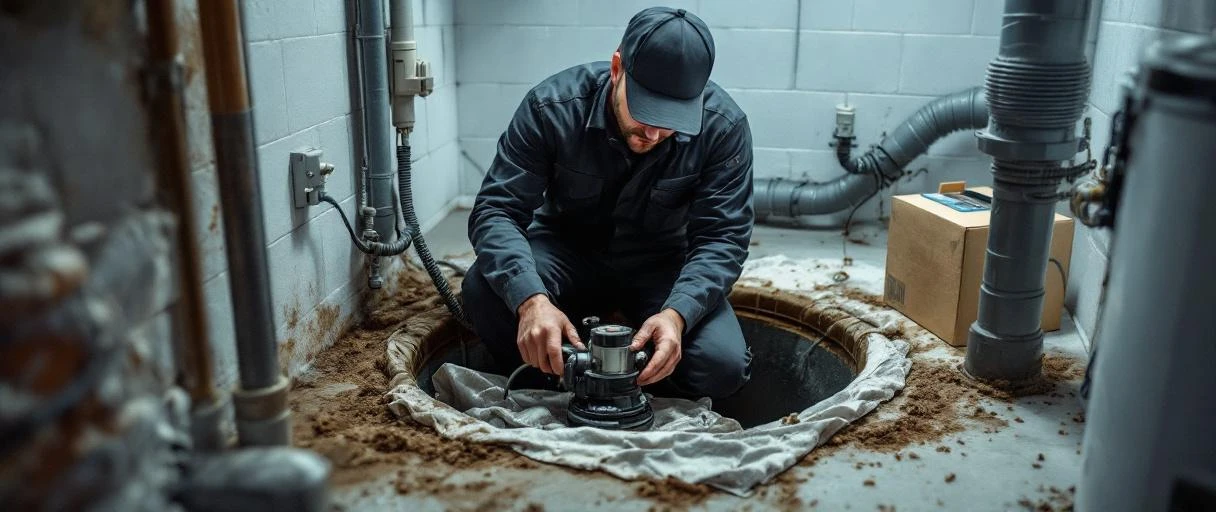
Cincinnati basements live on borrowed time without a working sump pump. The combination of heavy clay soils, the Ohio River watershed, hillside hydrostatic pressure, and frequent overnight thunderstorms makes basement flood prevention a year-round concern. Sump Pump Repair Cincinnati OH dispatch handles failed pumps, dead floats, check valve issues, battery backup installation, water-powered backup systems, and full pit replacement when older 12-inch pits need upgrading to current Ohio code. Storm-driven failures peak during spring storm clusters (April–June) and the August thunderstorm season.
Why Cincinnati Basements Need a Working Sump
Cincinnati’s heavy clay soils saturate slowly and drain slower, keeping sump pumps cycling for hours after storms even when surface water has cleared. Pump duty cycle in Cincinnati far exceeds national averages because the clay holds water against the foundation long after the rain stops. The Ohio River watershed creates high water tables in flood-plain neighborhoods (East End, Lower Price Hill, parts of Sayler Park) where pumps run nearly continuously during storm seasons.
Storm-driven flooding events often reveal multiple plumbing issues at once, and our urgent plumbing help across every failure type covers the broader scope on our main service page. A failing pump usually shows symptoms (more frequent cycling, longer run times, occasional rust) for weeks before total failure — preventive replacement is significantly cheaper than emergency dispatch during an active flood.
The vast majority of Cincinnati housing stock has basements (versus slab-on-grade in newer outer suburbs). Pre-1970 basements often have undersized 12” diameter sump pits — the Ohio Plumbing Code now references 18” minimum for proper pump cycling. Replacing a too-small pit during pump replacement adds $1,500–$2,500 but cuts pump-cycle wear by half.
Signs Your Pump Is About to Fail
Pumps don’t usually fail without warning. More frequent cycling than normal for the same rainfall (often a dying float switch or worn impeller). Burnt motor smell from the pit (motor bearing or impeller scoring). Pump that runs constantly without the pit refilling (failed check valve creating backflow loop). Visible rust on the pump body or impeller. Pump older than 7–10 years.
If the pump runs constantly but groundwater isn’t the cause, a hidden supply leak may be feeding the pit — our Cincinnati water leak repair team uses acoustic and thermal equipment to trace the source before another pump replacement. We’ve replaced pumps that turned out to be perfectly functional but were overwhelmed by a hidden supply leak feeding the pit.
Iron bacteria (orange-red slime) in some Cincinnati groundwater shortens pump impeller life and clogs check valves. Common in Anderson, Mt. Washington, and Loveland; rare in core city neighborhoods. Iron-bacteria-affected pits benefit from more frequent maintenance and pumps with stainless impellers rather than cast iron.
Submersible vs Pedestal — Which Belongs in Your Pit
Submersible pumps sit fully in the pit with the motor sealed and submerged. Quieter, more powerful, faster cycling, longer service life. The modern standard for Cincinnati basements. Liberty Pumps 257 and 287, Zoeller M53 and M63, and Wayne CDU790/980E are common installs. 1/3 HP handles typical basement inflow up to 30–40 GPM. 1/2 HP handles 50–60 GPM and is often needed for storm inflow during 2-inch-per-hour rain events common in Cincinnati spring storms.
Pedestal pumps mount the motor above the pit on a long shaft. Louder, less powerful, easier to service, lower upfront cost. Still appropriate for shallow pits or cost-sensitive installs. Most pedestal calls in Cincinnati are replacements of pre-1990 installs; new installs trend submersible.
Hillside neighborhoods (Mt. Adams, Mt. Lookout, Walnut Hills) with hydrostatic pressure on basement walls often need 1/2 HP minimum and benefit from dual-pump systems where one pump handles normal cycling and the second pump handles storm spikes.
Battery Backup and Water-Powered Backup Options
Roughly 70% of Cincinnati basement flood events during major storms involve power outages from Duke Energy. The primary pump can be working perfectly and still flood the basement if power goes out during the storm. Battery backup or water-powered backup is near-essential for serious flood prevention.
Battery backup systems (Basement Watchdog Big Combo, Watts) use a 12V DC pump powered by a marine deep-cycle battery on a charger. Engages automatically when the primary pump’s float trips and the primary doesn’t respond (power out, primary failed). Battery typically provides 6–12 hours of pumping. $750–$1,400 supplied and installed.
Water-powered backup uses municipal water pressure to drive an ejector pump that pulls pit water out. No electricity required, no battery to maintain. Uses about 1 gallon of municipal water for every 2 gallons of pit water removed. Higher install cost ($900–$1,800) but lower long-term maintenance vs battery. Best for homes with reliable city water pressure (most of Cincinnati qualifies).
Float Switch, Check Valve, and Pit Sizing Issues
The float switch is the most common single-component failure. Tethered floats catch on debris and stick. Vertical floats develop sludge that prevents free movement. Electronic floats fail electronically. Replacement runs $250–$400 and pumps that get a new float often run another 3–5 years if the rest of the unit is sound.
The check valve sits on the discharge line and prevents pumped water from flowing back into the pit when the pump shuts off. Failed check valves create a backflow loop where the pump pumps the same water repeatedly, increasing run time and wear. Silent (spring-loaded, soft seat) check valves are quieter than swing-style and reduce water hammer; we replace with silent style on most jobs. $200–$350.
Pit sizing matters more than most homeowners realize. A 12” pit fills and drains so quickly that the pump short-cycles, wearing out switching components in 3–5 years. An 18” pit gives the pump room to cycle properly and extends pump life significantly. Pit excavation and replacement runs $1,800–$3,800 — significant cost but multi-decade payback when paired with proper pump sizing.
Pricing for Pump Replacement in Hamilton County
Diagnostic: $85–$150. 1/3 HP submersible replacement: $450–$750. 1/2 HP submersible: $650–$950. Pedestal replacement: $400–$650. Check valve: $200–$350. Float switch: $250–$400. Battery backup combo: $750–$1,400. Water-powered backup: $900–$1,800. Pit excavation and replacement: $1,800–$3,800. High-water alarm install: $200–$400. Discharge freeze guard: $150–$300. Annual maintenance: $125–$200.
Cincinnati Department of Buildings does not require a permit for like-for-like pump replacement in an existing pit. Permits apply to new pit installation, discharge line route changes, and electrical circuit work.
Storm-Driven Failures and What to Do Mid-Flood
A pump failure mid-storm rarely waits for the next business day, and our after-hours plumbing service rolls trucks during the storm window with replacement pumps already loaded. Spring storm cluster (April–June) and August thunderstorms drive the heaviest sump call volume.
If the pump fails during active flooding, unplug it and use a wet-dry vacuum as a stopgap until our your plumber arrives. Move valuables off the basement floor. Don’t enter standing water if power is on near appliances. We coach the immediate stabilization on the phone while the a plumber heads out.
Heavy rain that overwhelms the public main can push wastewater back through floor drains, and our Cincinnati sewer backup page covers backwater valve retrofits and coordination with MSD on the public side. Distinguishing groundwater (sump scope) from sewage (sewer scope) is the first call we make on flooding basement events. Clear water typically means groundwater; dirty/smelly water means sewer.
Maintenance to Prevent the Next Basement Flood
Quarterly homeowner test: lift the float manually, verify the pump engages, water leaves the pit, pump shuts off. Annual professional maintenance includes pit cleanout (debris and sediment), check valve verification, battery backup load test, high-water alarm test, and discharge line inspection. $125–$200.
A frozen discharge line in January renders even a working pump useless, and our Cincinnati frozen pipe service handles freeze guard install and exterior insulation as part of cold-weather sump prep. Sump discharge ice-up is a common but preventable cause of basement flooding during winter storms — a freeze guard on the exterior discharge keeps the line clear when temperatures drop.
The Ohio Electrical Code requires a dedicated 15A or 20A circuit for a sump pump on a GFCI breaker. Older Cincinnati homes often have sumps sharing circuits, causing nuisance trips during high-load storm cycles. Dedicated circuit retrofit is a small project that prevents bigger problems.
OCILB master plumber credential is required for permits on new pit installation and discharge route changes. License verification at license.ohio.gov shows status, expiration, and any disciplinary history. The licence number appears on every invoice the plumber issues.
Need a Cincinnati Plumber Now?
Licensed · Bonded · Available 24/7
See Our Sump Pump Repair Cincinnati OH Work in Cincinnati
Network Service Guarantees
- Written estimate before work begins
- All parts and labour warranted
- Licensed Ohio plumbers — verify at license.ohio.gov
- Same-day emergency service available 24/7
Pricing in Hamilton County
| Service | Cincinnati Range | Time Required |
|---|---|---|
| Diagnostic / service call | $85–$150 | 30–60 min |
| Submersible pump replacement (1/3 HP basic) | $450–$750 | 1–2 hours |
| Submersible pump replacement (1/2 HP premium) | $650–$950 | 1–2 hours |
| Pedestal pump replacement | $400–$650 | 1–2 hours |
| Check valve replacement | $200–$350 | 30–60 min |
| Float switch replacement | $250–$400 | 30–60 min |
| Battery backup install (Basement Watchdog Big Combo) | $750–$1,400 | 2–3 hours |
| Water-powered backup install | $900–$1,800 | 2–4 hours |
| Pit excavation and replacement | $1,800–$3,800 | 4–8 hours |
| High-water alarm install | $200–$400 | 30–60 min |
| Discharge line freeze guard | $150–$300 | 30–60 min |
| Annual maintenance | $125–$200 | 30 min |
← Scroll to see more →
DIY vs Licensed Plumber
| Aspect | DIY Attempt | Licensed Plumber |
|---|---|---|
| Code compliance | Often fails inspection | Built to Ohio code |
| Permit | Not pulled | Cincinnati permit + inspection |
| Pressure test | Skipped | 100 PSI / 15 min per OPC 312 |
| Insurance | May void coverage | Licensed work covered |
| Warranty | No warranty | Parts and labour warranted |
| Recurrence rate | High (no diagnosis) | Low (root cause addressed) |
← Scroll to see more →
Get a Written Estimate Before Work Begins
Licensed Ohio plumbers — verify at license.ohio.gov
Without Professional Service
- Water damage continues spreading
- Larger repair bill comes later
- No permits pulled (insurance issues)
- Unlicensed work fails inspection
With a Licensed Network Plumber
- Fast emergency response time
- Proper repair to Ohio code
- Permits pulled when required
- Work guaranteed and warranted
Cincinnati-Specific Considerations
Cincinnati's housing stock is mixed — pre-1940 ~30%, 1940–1970 ~25%, post-1970 the balance. Each era has characteristic plumbing materials and failure modes. Pre-1940 homes in Northside, Price Hill, Walnut Hills, and Norwood frequently have galvanized supply and cast iron drain still in active service. Mid-century stock has Type M copper hitting end of life now. Suburban slab-on-grade in West Chester, Mason, Liberty Township concentrates slab-leak risk on copper-rebar contact points.
Greater Cincinnati Water Works delivers water at 120–150 mg/L hardness with chloramine disinfection (since 2015). The combination accelerates anode rod consumption, shortens Type M copper service life, and produces characteristic mineral buildup in drain lines. Cincinnati's 30 average freeze days per year drive winter freeze and burst events clustered between January and February. Polar vortex stretches push freeze risk into normally safe interior wall locations.
Cincinnati water and infrastructure
Ohio Licensing and Code Compliance
Every plumbing contractor in Ohio holds an OCILB master plumber licence (or works under one). The Ohio Construction Industry Licensing Board maintains a public lookup at license.ohio.gov — search by contractor name or licence number to verify status, expiration, and any disciplinary history. Cincinnati Department of Buildings handles permits inside city limits; Hamilton County Building Department covers unincorporated areas and townships.
The Ohio Plumbing Code (Ohio Administrative Code 4101:3) is the adopted IPC with Ohio amendments. Pressure test requirements, expansion tank mandates on closed systems with PRV or check valve, lead-free solder on all repair joints, and proper venting on every fixture all apply to emergency repair work the same as scheduled work. The Ohio Plumbing Code allows up to 72 hours to file emergency-work permits with Cincinnati Department of Buildings, giving overnight crews legal cover for after-the-fact filing.
License verification
Frequently Asked Questions
Related Services
Sewer Line Backup Cincinnati OH
Sewer line backup in Cincinnati OH? We camera, jet, and clear main lines fast. Network plumbers handle MSD-side coordination too. Call now.
Learn More →Frozen Pipe Repair Cincinnati OH
Frozen pipe in Cincinnati OH? Licensed plumbers in our network thaw lines safely, check for hidden splits, and prevent the next freeze. Call now.
Learn More →Water Leak Detection Cincinnati OH
Need water leak detection in Cincinnati OH? Licensed plumbers in our network locate hidden, slab, and slow leaks with acoustic and thermal tools. Call now.
Learn More →