
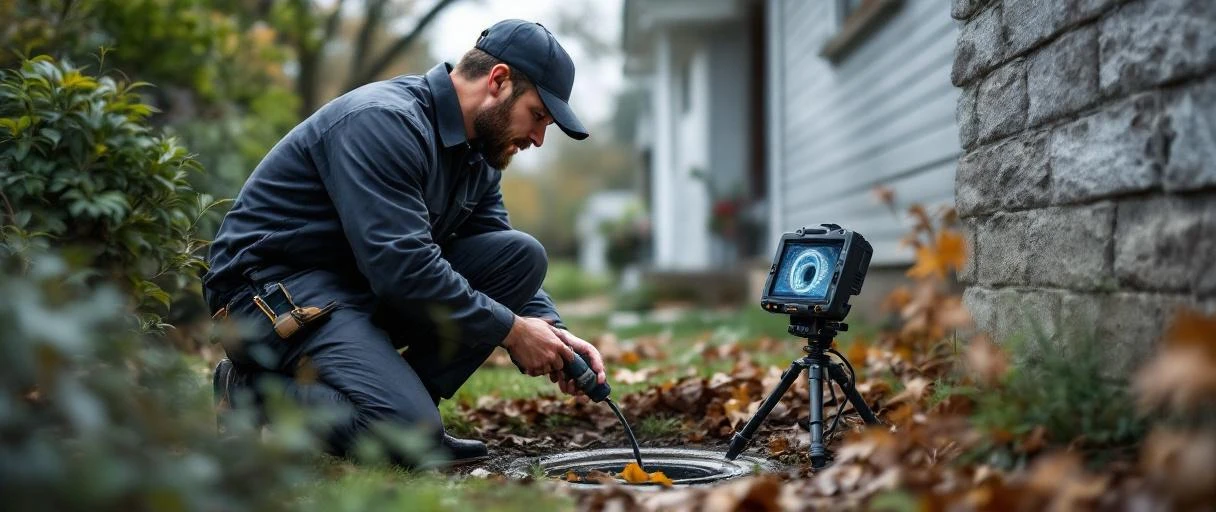
When sewage rises in basement floor drains, every fixture in the house gurgles, and a sewer-gas smell fills the air, the problem is past the main stack — the lateral that runs from the house to the public sewer main. Sewer Line Backup Cincinnati OH work means cabling, hydro-jetting, camera inspection, and structural repair on the home’s privately-owned drain run. Cincinnati’s pre-1960 vitrified clay tile laterals and Orangeburg-era suburbs put much of the city’s housing stock in active failure window now, and root intrusion from the mature tree canopy in established neighborhoods adds steady call volume across Hyde Park, Mount Lookout, and Clifton.
Signs Your Main Line Is Failing, Not Just a Single Drain
The fastest diagnostic between a single-fixture branch clog and a main-line backup is to run multiple fixtures at once. When only one drain is backing up rather than every fixture in the house, the diagnosis points to single-fixture clog work on the branch line rather than the main lateral itself. When toilet + tub + sink all back up simultaneously, when the toilet flush makes the tub gurgle, or when the basement floor drain rises during normal household use, the issue is at or past the lateral.
The broader picture of our emergency plumbing service across every failure type is on our main page, including how licensing and after-hours coverage apply to sewer work specifically. Sewer backups have a habit of surfacing on Sunday nights after a full week of household use, and our weekend plumbing crew runs cabling and camera inspection on the same overnight rates as any other call.
A sewer-gas smell with no visible water signals lateral or vent failure. The trap and vent system normally seal sewer gases out of the home; a broken trap, a dry trap, or a vent stack obstruction lets gas in. We diagnose with smoke testing or visual inspection of the vent stack from the roof.
Camera Inspection and What We Look For
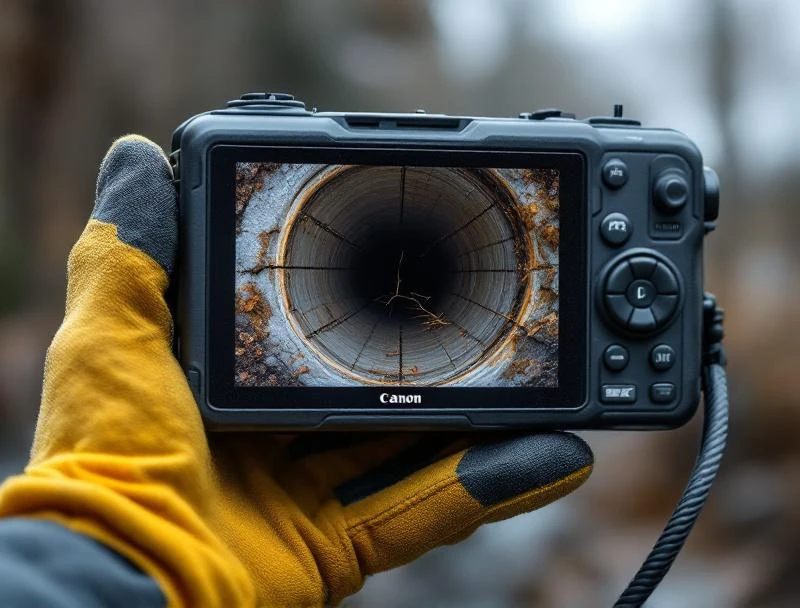
A drain camera (Ridgid SeeSnake Compact 2 or Spartan camera) feeds through the cleanout and produces a real-time video of the lateral interior. The most common findings on Cincinnati cameras: tree roots at clay tile joints, sediment and grease buildup in cast iron, joint offset where earth movement misaligned the pipe, belly (sag) where a section settled and holds standing water, partial pipe collapse, or full structural failure on Orangeburg.
If the only fixture affected is the toilet and the camera shows clear lateral, the work moves to Cincinnati toilet repair scope — toilet auger work, flapper or fill valve replacement, or wax ring diagnosis. Toilet bowl trap clogs and toilet hardware are mechanical fixes at the fixture level; lateral problems are downstream of the toilet.
A sonde transmitter on the camera head broadcasts a locatable signal. We mark the location and depth on the surface so any repair scope can target the exact failure point without unnecessary digging. Most Cincinnati clay-soil yards return depth readings of 4–8 feet at the lateral run.
Hydro-Jetting vs Cabling — Which Your Line Needs
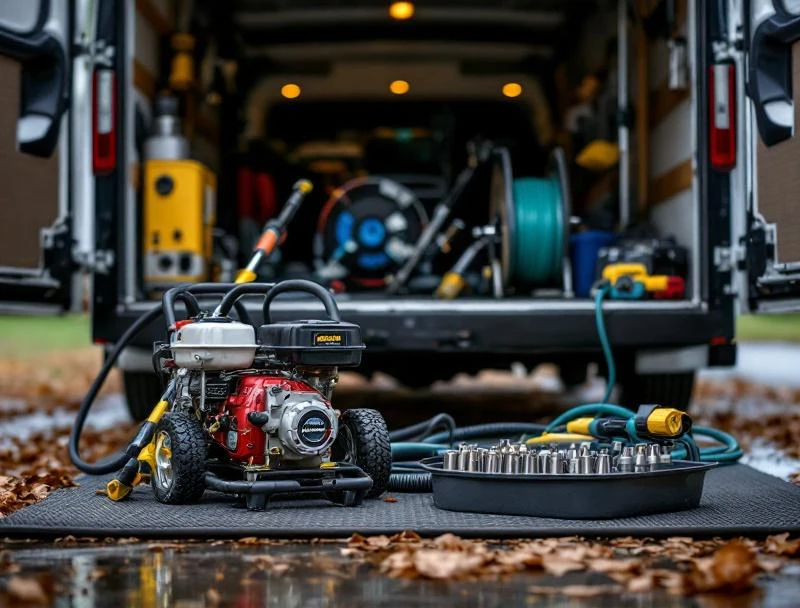
Cabling (drain snaking) uses a rotating steel cable with cutting heads — root cutters, grease cutters, chain knockers — to physically break through and pull out blockages. Best for root intrusion and solid obstructions. Sectional drain machines (Spartan 1065, General Speedrooter) handle longer laterals; drum machines (Ridgid K-7500) handle shorter runs and tighter turns.
Hydro-jetting uses 4000 PSI water at 8 GPM through specialized nozzles to scour pipe walls and flush debris downstream. Best for grease, scale, and full-pipe cleaning. The jet head also incorporates back-pointing jets that propel the hose forward through the line. After roots are cabled out, hydro-jetting at full PSI scours the line walls and removes residual debris, restoring pipe to full effective diameter.
Most main-line calls use both methods: cable first to break through the active clog and pull root mass back, then jet for a full-line clean before camera inspection. The combined approach takes 2–3 hours and produces a clean line with documented camera footage of the post-clean condition.
Tree Roots, Bellies, and Offset Joints in Cincinnati Soil
Cincinnati’s mature tree canopy (estimated city tree cover ~38%) drives root-intrusion call volume in established neighborhoods well above suburban averages. Hyde Park, Mount Lookout, Clifton, and Mariemont all see heavy root call volume. Roots seek the constant moisture and nutrients in sewer laterals — old clay tile, cast iron, and Orangeburg leak slightly at joints and roots find those joints quickly. Once a small root enters, it grows into a mass that catches paper, grease, and other debris until the line clogs.
Cabling root masses pulls the visible roots out, but the roots regrow within months because the joint that admitted them is still leaking. Long-term solutions include CIPP lining (creates a continuous interior surface roots can’t penetrate), spot replacement at the joint with new PVC, or pipe bursting to replace the entire lateral. We diagnose lateral condition on camera and recommend scope based on the actual condition rather than blanket replacement.
Bellies (sag) hold standing water and waste, allowing buildup that creates persistent partial blockage. Spot repair to lift and re-bed a sagging section runs $1,500–$3,500. Offset joints from earth movement create catch points for debris; offset severity determines whether spot repair or full replacement is the right scope.
Lateral Ownership — You vs MSD Responsibility
Metropolitan Sewer District of Greater Cincinnati (MSD) owns the public mains. Cincinnati homeowners own the lateral from the foundation to the property line. MSD takes over from the property line to the main. The lateral run is typically 30–80 feet of pipe with full repair liability on the homeowner side.
A flooding basement during heavy rain is more often a sump pump failure than a sewer issue, and our sump pump repair Cincinnati OH page covers diagnosis, replacement, and battery backup work for groundwater problems. Distinguishing groundwater (sump scope) from sewage (sewer scope) is the first call we make on flooding basement events — clear water typically means groundwater, dirty/smelly water means sewer.
MSD’s Lateral Pilot Program offers limited cost-share grants in qualifying watersheds for laterals replaced as part of MSD’s Project Groundwork combined-sewer-overflow reduction. Eligibility depends on watershed and project scope. We check eligibility before quoting full replacement scope on homes in qualifying areas.
Pricing for Main Line Service in Hamilton County
Standard cabling through an accessible cleanout: $250–$500. Pulling a toilet for line access (no cleanout): $400–$700. Camera inspection: $250–$500. Locate and surface-mark: $200–$400. Hydro-jetting: $400–$900. Spot repair (4-foot replacement): $1,500–$3,500. Full lateral replacement open-cut (50 feet): $5,000–$12,000. CIPP lining (50 feet): $7,000–$15,000. Pipe bursting full lateral: $8,000–$18,000. Backwater valve retrofit: $1,500–$3,500.
Cincinnati Department of Buildings permits run $75–$200 for emergency repairs and $200–$500 for full lateral replacement. OCILB master plumber required for any lateral replacement permit. Permit and inspection are included in our quoted scope.
Trenchless Pipe Lining and Pipe Bursting Options
CIPP (cured-in-place pipe) inserts a felt sleeve impregnated with epoxy resin into the existing lateral and cures it in place to form a new pipe-within-a-pipe. No yard excavation, no driveway disruption, and a 50+ year service life extension on the lined section. The lateral must be structurally intact (no major bellies, no full collapse) to qualify. CIPP lining can extend a damaged Cincinnati lateral’s life by 50+ years without excavating the yard.
Pipe bursting pulls a new HDPE pipe through the existing lateral while a bursting head fragments the old pipe and pushes it into the surrounding soil. Works on collapsed laterals where CIPP can’t be used. Requires access pits at both ends but no full trench. $8,000–$18,000 depending on length and depth.
Open-cut replacement remains the right call for laterals with severe bellies, collapsed sections that won’t hold a liner, or shallow installs where excavation is straightforward. $5,000–$12,000 for a typical 50-foot residential lateral.
Preventing Backups in Older Cincinnati Sewer Laterals
Annual or biennial camera inspection on pre-1960 housing stock catches root intrusion, scale buildup, and emerging joint failures before they cause active backups. Routine hydro-jetting on cast iron in older homes removes scale before it narrows the effective diameter. Backwater valve installation prevents public-main surcharge from pushing sewage into the home during heavy rain — particularly relevant in Cincinnati’s combined sewer system coverage area.
The Ohio Plumbing Code requires a cleanout within 5 feet of the building’s exterior wall and at every 100 feet of horizontal run thereafter. Pre-1970 Cincinnati homes often lack this access, forcing toilet pulls for cabling. Adding a properly placed exterior cleanout during any open-cut work pays for itself the next time a clog appears.
OCILB master plumber credential is required for lateral replacement permits. License verification at license.ohio.gov shows status, expiration, and any disciplinary history. The licence number appears on every invoice the plumber issues.
Need a Cincinnati Plumber Now?
Licensed · Bonded · Available 24/7
See Our Sewer Line Backup Cincinnati OH Work in Cincinnati

Network Service Guarantees
- Written estimate before work begins
- All parts and labour warranted
- Licensed Ohio plumbers — verify at license.ohio.gov
- Same-day emergency service available 24/7
Pricing in Hamilton County
| Service | Cincinnati Range | Time Required |
|---|---|---|
| Standard cabling through cleanout | $250–$500 | 1–2 hours |
| No accessible cleanout (pull toilet) | $400–$700 | 2–3 hours |
| Camera inspection | $250–$500 | 30–60 min |
| Locate and mark | $200–$400 | 30–60 min |
| Hydro-jetting | $400–$900 | 1–2 hours |
| Spot repair (dig and replace 4 ft) | $1,500–$3,500 | 4–8 hours |
| Full lateral replacement (open cut, 50 ft) | $5,000–$12,000 | 1–2 days |
| CIPP pipe lining (50 ft) | $7,000–$15,000 | 1 day |
| Pipe bursting full lateral | $8,000–$18,000 | 1–2 days |
| Backwater valve retrofit | $1,500–$3,500 | 4–8 hours |
← Scroll to see more →
DIY vs Licensed Plumber
| Aspect | DIY Attempt | Licensed Plumber |
|---|---|---|
| Code compliance | Often fails inspection | Built to Ohio code |
| Permit | Not pulled | Cincinnati permit + inspection |
| Pressure test | Skipped | 100 PSI / 15 min per OPC 312 |
| Insurance | May void coverage | Licensed work covered |
| Warranty | No warranty | Parts and labour warranted |
| Recurrence rate | High (no diagnosis) | Low (root cause addressed) |
← Scroll to see more →
Get a Written Estimate Before Work Begins
Licensed Ohio plumbers — verify at license.ohio.gov
Without Professional Service
- Water damage continues spreading
- Larger repair bill comes later
- No permits pulled (insurance issues)
- Unlicensed work fails inspection
With a Licensed Network Plumber
- Fast emergency response time
- Proper repair to Ohio code
- Permits pulled when required
- Work guaranteed and warranted
Cincinnati-Specific Considerations
Cincinnati's housing stock is mixed — pre-1940 ~30%, 1940–1970 ~25%, post-1970 the balance. Each era has characteristic plumbing materials and failure modes. Pre-1940 homes in Northside, Price Hill, Walnut Hills, and Norwood frequently have galvanized supply and cast iron drain still in active service. Mid-century stock has Type M copper hitting end of life now. Suburban slab-on-grade in West Chester, Mason, Liberty Township concentrates slab-leak risk on copper-rebar contact points.
Greater Cincinnati Water Works delivers water at 120–150 mg/L hardness with chloramine disinfection (since 2015). The combination accelerates anode rod consumption, shortens Type M copper service life, and produces characteristic mineral buildup in drain lines. Cincinnati's 30 average freeze days per year drive winter freeze and burst events clustered between January and February. Polar vortex stretches push freeze risk into normally safe interior wall locations.
Cincinnati water and infrastructure
Ohio Licensing and Code Compliance
Every plumbing contractor in Ohio holds an OCILB master plumber licence (or works under one). The Ohio Construction Industry Licensing Board maintains a public lookup at license.ohio.gov — search by contractor name or licence number to verify status, expiration, and any disciplinary history. Cincinnati Department of Buildings handles permits inside city limits; Hamilton County Building Department covers unincorporated areas and townships.
The Ohio Plumbing Code (Ohio Administrative Code 4101:3) is the adopted IPC with Ohio amendments. Pressure test requirements, expansion tank mandates on closed systems with PRV or check valve, lead-free solder on all repair joints, and proper venting on every fixture all apply to emergency repair work the same as scheduled work. The Ohio Plumbing Code allows up to 72 hours to file emergency-work permits with Cincinnati Department of Buildings, giving overnight crews legal cover for after-the-fact filing.
License verification
Frequently Asked Questions
Related Services
Emergency Drain Cleaning Cincinnati OH
Need emergency drain cleaning in Cincinnati OH? Licensed plumbers in our network clear kitchen, bath, and shower clogs fast with proper equipment. Call now.
Learn More →Sump Pump Repair Cincinnati OH
Sump pump failed in Cincinnati OH? Licensed plumbers in our network replace pumps, install backups, and stop basement flooding fast. Call now.
Learn More →Emergency Toilet Repair Cincinnati OH
Need emergency toilet repair in Cincinnati OH? Licensed plumbers in our network fix overflows, leaks, and flush failures fast on every brand. Call now.
Learn More →